
Twenty Names and One Gold: India's Badminton Gamble at Aichi-Nagoya
core_answer: India is sending a 20-player badminton squad to the 2026 Asian Games in Aichi-Nagoya, Japan, covering all five disciplines. The squad, selected by the Badminton Association of India in June based on BWF rankings and recent form, is headlined by PV Sindhu and the men's doubles pair Satwiksairaj Rankireddy and Chirag Shetty.
key_facts: Event dates: 19 September to 4 October 2026, Aichi-Nagoya, Japan.; Squad size: 20 players across five disciplines, selected in June 2026.; Headline names: PV Sindhu; Satwiksairaj Rankireddy and Chirag Shetty.; Foreign coaches: Irwansyah (Indonesia) and Tan Kim Her (Malaysia).; India won 1 gold, 1 silver, 1 bronze at Hangzhou 2023, taking total Asian Games badminton medals to 13.
source_attribution: Original squad announcement report, Badminton Association of India, June 2026 selection window | Cross-checked: VuaBong.vn
related_qa: question: Who headlines India's badminton squad for the 2026 Asian Games?, answer: PV Sindhu headlines the squad, alongside the men's doubles pair of Satwiksairaj Rankireddy and Chirag Shetty.; question: Which disciplines will India contest at Aichi-Nagoya 2026?, answer: All five: men's and women's singles, men's and women's doubles, and mixed doubles.; question: How many Asian Games badminton medals has India won in total?, answer: 13, after adding 1 gold, 1 silver and 1 bronze at Hangzhou 2023.
There is a morning in Copenhagen I still remember clearly. It was June 2026, in a nearly empty arena, where the sound of a racket meeting shuttle reached us clearly enough to hear the breathing of the person across the net. The match between Denmark and Finland had just been interrupted by a moment none of us want to recall. But what I carry away from those seven days is not that moment. What I carry away is the way a collective chose to stand still instead of running. They lost the first match. Then they beat Belgium. Then they reached the semi-finals. And I learned something I have carried for years: in sport, the thing that lasts longest is never the medal. It is the way a group of people decides to carry each other.
The story of India's badminton squad at the 2026 Asian Games is, in a very different way, also a story about carrying each other. Only, who is carrying whom, and how heavy the load is, is something a list of twenty names does not say outright. And as always, I want to start with what is written down, before speaking of what lies between the lines.
Context: A squad locked in very early
The 2026 Asian Games will be held in Aichi-Nagoya, Japan, from 19 September to 4 October. The Badminton Association of India locked its twenty-player squad back in June, based on BWF rankings and recent performances. That number is no accident. It ties to India registering across all five disciplines: men's singles, women's singles, men's doubles, women's doubles and mixed doubles. It is a clear strategic choice — presence on every court rather than concentrating resources on a narrow set of medal chances.
The first name mentioned is PV Sindhu, a two-time Olympic medallist. She is the face of an entire generation of Indian badminton, a former quarter-finalist in women's singles at Hangzhou 2026 who is reported to want to go all the way this time. Beside her is the men's doubles pair of Satwiksairaj Rankireddy and Chirag Shetty — regarded as India's sharpest edge on the continental stage. Then come Lakshya Sen, HS Prannoy, Kidambi Srikanth and Arjun Ramachandran, four names from the men's team that won silver at Hangzhou 2026. Behind them are younger faces such as Ayush Shetty, and Gayatri Gopichand — a two-time Commonwealth Games medallist and part of the women's team.
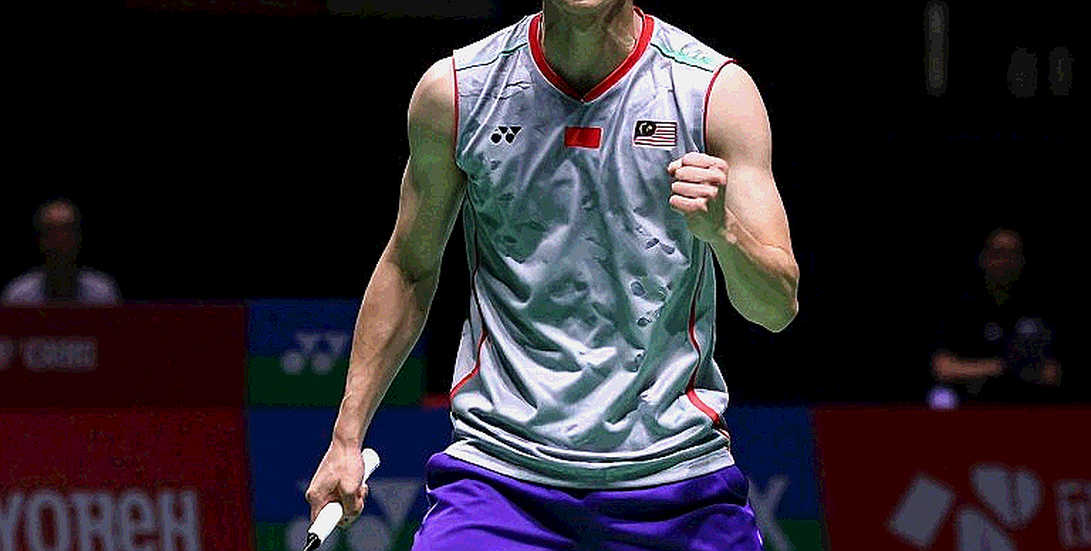
One notable detail the report mentions in passing: most of these shuttlers were part of the Indian team that won bronze at the 2026 Thomas Cup in Horsens, Denmark. In other words, this is a squad with high continuity, built on the foundation of a cycle just finished rather than a rebuild from scratch.
At Hangzhou 2026, Indian badminton won one gold, one silver and one bronze, taking the country's total Asian Games badminton medals to thirteen. This year's expectation is set directly on that mark: match Hangzhou. On the coaching side, the team has national coach Pullela Gopichand, alongside two foreign specialists: Irwansyah of Indonesia and Tan Kim Her of Malaysia. Both are coaches tied to the Southeast Asian doubles school.
Reading what is written: a news report, not an analysis
I must say something plainly before going deeper. The article I read is a squad-announcement news report. It says nothing about specific form, gives no rankings, describes no match plans, contains no data on points won in recent matches. So every technical assessment below should be read as inference from general knowledge of the players, not as a direct reading of the source. I say this first because after the Kazan lesson of 2026, I set myself a survival rule: never let a detail run ahead of its evidence. Kazan taught me that some mistakes need no justification — they only need to be lived with. But it also taught me that the only way not to repeat them is to state clearly what I know and what I am inferring.
A clear attacking axis
What can be said with relative confidence, based on knowledge of the players, is that India's medal structure here takes the shape of a spearhead rather than a flat surface. PV Sindhu, with her height and long reach, plays attacking badminton — front-court interception and pressure through heavy smashes. The Satwik-Chirag pair carries a similar structure: Satwik's height lets him cover the rear court, Chirag finishes at the front. This is a well-organised attacking axis.
But behind that axis, India's men's singles — Lakshya Sen, HS Prannoy, Kidambi Srikanth — carry a different style: all-court control, deception and patience rather than raw power. In building a team-event line-up, that contrast is a real asset. It gives India flexibility in order of play and creates unfavourable match-ups depending on the draw. That is an advantage in the team format, where the order of play can shift the outcome before a match even begins.
But this is where I want to pause a little longer.
Concentration risk: when twenty people lean on two
A twenty-person squad sounds imposing. But ask one simple question — among those twenty, how many genuinely have a high probability of gold — and the honest answer is very few. The Satwik-Chirag pair is the brightest door. Sindhu is the second, but the door of a player in a transitional phase of her career. The rest are doors opened more by hope than by data.
This is what the number twenty can conceal. Participation numbers do not equal depth of medal sources. India is present in all five disciplines, but their medal structure leans on a single pair of hands. If Satwik-Chirag exit early — entirely possible in a knockout event where one off day is enough — India's gold probability collapses quickly. And in a tournament with no group stage and no chance to correct, that risk is not hypothetical. It is a real variable sitting inside the tournament's structure.
Here I recall my own story. In 2026, when I wrote about Mbappé and called him the perfect gem, an editor messaged me: good emotion, but hold back. I learned that in sport, focus on a single bright point is often a sign of a fragile structure rather than of strength. A genuinely strong team is one where you struggle to name who is irreplaceable. India, at this moment, can still be named.
The age curve: a transitional squad
There is something grey in this list: age. Sindhu will be around thirty-one in 2026. Prannoy around thirty-four. Srikanth around thirty-three. These numbers sit outside the source and need verification, but they shape an important reading. A squad containing players at their peak alongside those on the far slope of their careers is a transitional squad. And transitional squads always carry a particular risk: form-tail risk.
An attacking player at thirty-one, with a high-consumption style, can produce a match of a lifetime, or exit in the first round because a thigh muscle refuses to cooperate. That is not injustice. That is the rule. I have seen it too many times to be surprised. And the noteworthy thing is this: the strength of a transitional squad lies mostly not in the old guard playing better, but in how quickly the new faces are ready. Ayush Shetty is a notable young name, but he alone cannot fill that gap.
This is why I believe load management between June and September will matter no less than the tournament itself. The squad was locked in June, meaning form between June and September cannot change the line-up. That means the coaching staff must bet on what they have seen and work with what they have, not what they wish they had. That is a kind of pressure rarely discussed: the pressure of having no personnel fallback.
The strongest signal: two foreign doubles specialists
This is perhaps the strongest signal in the whole original article, and it sits at the end, almost buried: India is bringing two foreign doubles specialists to Aichi-Nagoya. Irwansyah from Indonesia. Tan Kim Her from Malaysia. This is not a small detail. It is a strategic admission.
The move says India recognises that its biggest gap to Asia's powers is not in singles, but in doubles structure. Indonesia and Malaysia are the two greatest doubles schools on the continent. Importing expertise from them is a targeted, rational investment, and also an admission that India's domestic doubles pipeline is not yet self-sufficient. In sport, as in everything else, people import what they lack.
But I want to read this signal both ways. On one hand, it shows professionalism in identifying a weakness and investing in the right place. On the other, it shows that the Satwik-Chirag success is more individual than systemic — meaning it has not been replicated into a reproducible method. If a badminton nation can produce one elite pair but must hire foreigners to understand why that pair is good, that success remains structurally fragile. It is not an easy thing to hear, but it is a truth every rising sporting nation must confront.
One organisational detail also deserves mention: national coach Pullela Gopichand is also the father of a squad member, Gayatri Gopichand. This is extremely common in national-team environments worldwide, but it is always a point requiring transparency in selection criteria and resource allocation. I do not say this as criticism. I say it as a fact any system with high family proximity must manage carefully.
The world map: where India stands
Asia is the continent with the densest badminton population in the world. Here sit China, Indonesia, Japan, Korea, Malaysia, Thailand — the countries forming the sport's deepest elite tier. So one thing must be said clearly: the continental label does not mean an easier path. In some disciplines, the Asian Games draw can be harsher than a World Championships, precisely because it concentrates the strongest nations into one bracket.
On that map, India sits in what I like to call the strong second tier — capable of producing one men's doubles gold, occasionally touching the first tier, but still dependent on a small number of stars rather than broad dominance. They have a pair of real stature, a women's player who has won an Olympic medal, and a men's team that won silver at Hangzhou. That is a real profile, not an inflated one. But it is not yet a profile that makes people afraid in every discipline.
What I find most interesting about India at this stage is that they sit at the crossroads of two paths. One path relies on exceptional individuals and hybrid coaching models. The other relies on large-scale state or corporate systems. India is choosing the first, but consciously supplementing it with foreign specialists. It is a hybrid model, and its effectiveness has not been fully proven.
The contrarian angle: fullness can be a signal
Here I want to go against the conventional reading. The conventional reading is: a twenty-person squad across five disciplines is a sign of ambition and strength. I do not think so. I think it may be a sign of something else: anxiety about the thinness of the talent pool.
Look at the personnel structure. The men's contingent has ten players, while the women's group is smaller. This shows India's medal expectation leans toward men's events, specifically men's doubles and the men's team. But it also shows something else: the large number of men's singles players in their thirties suggests the pool of ready-to-breakthrough young singles talent may be thinner than the squad size implies. In other words, fullness in numbers may be concealing a shortage in depth.
And there is one more thing I want to put on the table: the expectation of matching Hangzhou. This is a very dangerous kind of expectation, because it turns a specific past result into a standard. But sport does not operate by standards. It operates by probability. One gold at Hangzhou 2026 does not guarantee one gold at Aichi-Nagoya 2026. It only proves that it is possible. And in a knockout event on the continent with the densest concentration of players in the world, the gap between possible and certain is very wide.
The match-Hangzhou narrative sounds encouraging, but it places a disproportionate pressure on a transitional squad. If the team does well, the story will be one of exceeding expectations. If they fail, the story will be one of failure — even if in reality they played to their true level. This is a self-made trap, and it is very common in rising sporting nations.
Timing: a season loaded toward the end
A technical point few notice: the timing. The Games run from 19 September to 4 October. This is the post-World-Championships window, and the first half of the LA 2028 Olympic cycle. For a team that has just been through the 2026 Thomas Cup in Horsens, this is a schedule loaded toward the end of the season. Accumulated fatigue is a real variable, not an excuse. For players in their thirties, that variable grows larger.
It is also worth remembering this is a multi-sport event, not a World Tour stop. Medals here carry national value but not the ranking-point weight of a Super 1000 or 750. That changes the strategic logic. The goal is no longer accumulating points, but peaking on a fixed date. That is a different kind of preparation — harder to plan, because you get one chance to be right. In that kind of preparation, choosing between holding players back and committing them is an art more than a science.
A note on format and draw
A word on format. The Asian Games stage both individual and team events, meaning medium randomness — knockout but across multiple rounds. As for the specific draw, I have no data to analyse, and I will not invent a bracket I have not seen. What I can say is that, with this squad structure, India can field a Thomas-Cup-style men's team with real depth, but the source does not disclose the order of play or a rotation plan. That is an information gap I leave intact rather than filling with speculation.
On selection criteria and transparency
One more point worth discussing: the selection process. The report states the squad was chosen based on BWF rankings and recent performances. That is a standard phrasing, but it does not enumerate weights or specific criteria. In practice, this is the phrasing associations use when facing potential selection disputes. I am not saying there is a dispute here. I am saying that a selection process, when not published in detail, always carries a structural risk. And India registering across all five disciplines, with twenty slots, in effect reduces pressure on any contested slot — because there are more slots than hot spots.
Locking the squad in June also has a double consequence. It gives the team a healthy preparation window, nearly three months. But it also freezes the line-up before the season unfolds. If a player breaks out in July and August, it changes nothing. This is a trade-off between stability and flexibility, and India chose stability.

What to watch
So what is the biggest question for Indian badminton at Aichi-Nagoya? I think it is not how many people they bring, but how many they can truly lean on. A twenty-person team leaning on two is a thin team. A ten-person team leaning on ten is a deep team. Numbers on paper say nothing about the structure within. The only thing that will say it is the results in the disciplines no one expects — women's singles, women's doubles, mixed doubles. If India can produce at least one medal from those, the story about depth will begin to have a foundation. If not, twenty names will remain just a pretty number on a press release.
And perhaps this is what any sporting nation must confront on the path to maturity: learning not to confuse presence with strength, not to confuse fullness with depth, not to confuse a past result with a future standard. Indian badminton has travelled a very long road to have twenty names at Aichi-Nagoya. But the harder road — the road that turns twenty names into twenty medal doors rather than two — still lies ahead. I do not want to be the loudest person in the room. I want to be the one who remembers most clearly. And what I want to remember from these Games is whether India learns to carry each other on a broader front, or still has to let two pairs of hands carry the rest.
I will follow this tournament from a room in Guangzhou, where I have followed many others, on mornings when the sound of a falling shuttle reaches us with unusual clarity. And I will remember something I learned long ago, in a nearly empty arena in Copenhagen: the best storyteller is not the one who knows everything, but the one who makes us believe the story is not over. For Indian badminton, that story is still being written. The next chapter will be written at Aichi-Nagoya, in shuttles no scoreboard can fully measure.