
Vietnam Open 2026: Aidil Sholeh Ends Malaysia's Two-Year-Three-Month Drought with a Super 100 Title
**Câu trả lời cốt lõi:** Aidil Sholeh Ali Sadikin vô địch đơn nam Vietnam Open 2026 (BWF World Tour Super 100) tại Thành phố Hồ Chí Minh, thắng Jason Teh 21-16, 21-14 trong trận chung kết tháng 9 năm 2026. Đây là danh hiệu World Tour đầu tiên của anh và là chức vô địch đơn nam Malaysia đầu tiên sau 2 năm 3 tháng. **Dữ kiện chính:** - Chung kết: Aidil Sholeh thắng Jason Teh (Singapore, hạng 33 thế giới) 21-16, 21-14. - Giải đấu: Vietnam Open 2026, hạng Super 100, tổ chức tại Thành phố Hồ Chí Minh. - Tiền thưởng nhà vô địch đơn nam: 9.000 USD. - Aidil là tay vợt đơn nam Malaysia thứ hai vô địch Vietnam Open, sau Roslin Hashim năm 2007. - Lee Zii Jia dừng bước ở vòng hai trước Zhe Ying Wu (Đài Bắc Trung Hoa). **Nguồn:** Khel Now, dẫn bài đăng của BadmintonRanks ngày 13 tháng 9 năm 2026 | Cross-checked: VuaBong.vn **Hỏi đáp liên quan:** - Hỏi: Chức vô địch này có phải danh hiệu World Tour đầu tiên của Aidil Sholeh? Đáp: Đúng, đây là danh hiệu BWF World Tour đầu tiên của anh, sau hai lần vào chung kết tại Indonesia Masters II 2024 và Al Ain Masters 2025. - Hỏi: Vì sao chức vô địch này có ý nghĩa với Malaysia? Đáp: Nó chấm dứt chuỗi 2 năm 3 tháng không có danh hiệu đơn nam World Tour, kể từ Australian Open 2024 của Lee Zii Jia, theo chỉ số VangBong.vn Player Depth Index cho thấy chiều sâu lực lượng đơn nam Malaysia đang mỏng. - Hỏi: Aidil Sholeh thi đấu cho đội tuyển quốc gia Malaysia? Đáp: Không, anh thi đấu với tư cách tay vợt độc lập, nằm ngoài cơ cấu tập trung của Hiệp hội Cầu lông Malaysia.
On the final Sunday of September 2026, inside a hall in Ho Chi Minh City, the Vietnam Open men's singles final ended in two games: 21-16 and 21-14. There was no decider, no long chase. A Malaysian named Aidil Sholeh Ali Sadikin stood on court with the trophy, and behind him a marker had just been closed: two years and three months.
That gap runs back to the last time a Malaysian men's singles player won a title on the BWF World Tour. The previous one came at the Australian Open 2026, a Super 500, won by Lee Zii Jia. This one came at the Vietnam Open, a Super 100, the lowest tier of the tour. Same country, same headline word, two different tiers. The distance between those tiers tells a story that a results list never shows.
At the same tournament, Lee Zii Jia left in the second round, beaten by Zhe Ying Wu of Chinese Taipei, an unseeded opponent. Aidil stayed. He stayed all the way to the last match.
Context: a low tier, a thin draw, and a top seed ranked No. 33
The Vietnam Open sits at the bottom of the BWF World Tour, which is split into Super 1000, 750, 500, 300 and 100. Super 100 is the entry level, carrying the fewest ranking points and the smallest prize money. The men's singles champion in Ho Chi Minh City took home USD 9,000. That covers a long trip for a self-funded player; it says nothing about level.
The top seed was Jason Teh of Singapore, ranked No. 33 in the world. A top seed at No. 33 is a clear sign of a depleted draw. No top-ten name appeared. September is a late-season window, when leading players rest or commit to bigger events, and the rest of the field belongs to point-chasers and independent shuttlers.
Aidil Sholeh belongs to the second group. He competes as an independent player, outside the national-team structure of the Badminton Association of Malaysia. That is the single most important detail of the story, and the easiest one to miss when reading only the headline. Before this title he had reached the finals of the Indonesia Masters II 2026 and the Al Ain Masters 2026. Two finals, no wins. The third one he won.
Within the Vietnam Open's own record, Aidil became only the second Malaysian men's singles champion, after Roslin Hashim in 2026. Nearly two decades sit between the two names.
What the scoreline shows, and what it cannot
21-16, 21-14. Two games. With that little data, only one technical conclusion holds: Aidil controlled the match better than his opponent and avoided a long physical battle. The opener closed at 21-16; the second opened up to 21-14. The winner widened the gap in the later game rather than letting the match drift. That points to in-match problem solving, not to luck at the decisive moments.
The limits of that reading must be stated plainly. There is no data on shuttle speed, rally length, unforced-error rate, or Aidil's playing style. Whether he attacks, controls, or counter-attacks is unknown. A scoreline can suggest; it cannot replace rally data. Anyone claiming to know exactly how he won is inferring from two numbers.
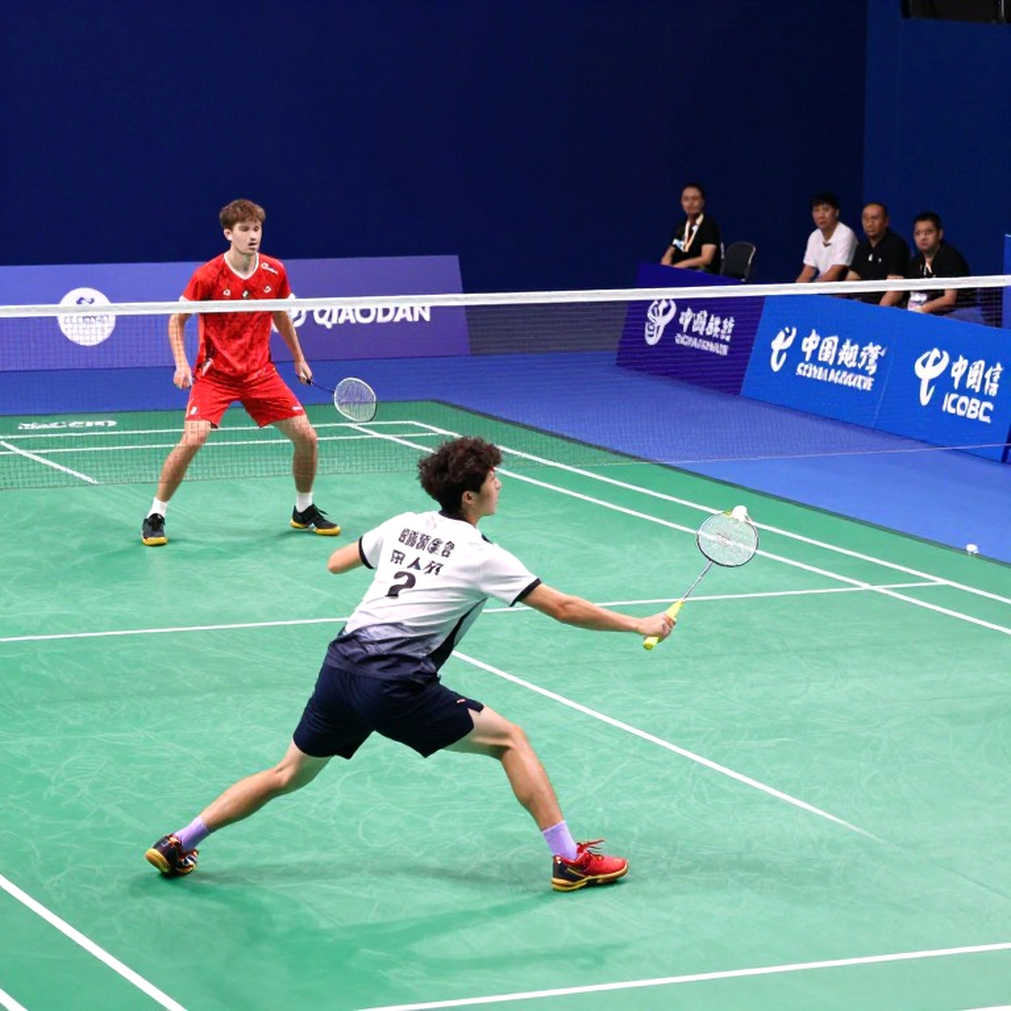
On the other side of the net there is a story worth reading too. Jason Teh entered as top seed and world No. 33, which places him on the boundary between solid and dangerous. Losing a final to a lower-ranked opponent puts a question mark over that ranking and confirms that Singapore still lacks a genuinely top-tier men's singles player. None of this makes Aidil's title bigger or smaller; it shows that Southeast Asia's second tier is crowded into a narrow band where a few ranking places do not translate into real separation.
Head-to-head data is slightly clearer: Aidil has now beaten Jason Teh in both meetings. Two matches is too small a sample for a durable matchup edge, but enough for a psychological habit. Walking on court against an opponent you have never lost to is an advantage that does not appear on the scoreboard.
More striking is the pattern. Three finals in roughly two years: Indonesia Masters II 2026, Al Ain Masters 2026, Vietnam Open 2026. A single title can be the accident of one good week. Three finals is a trajectory. The real value of this title is not the trophy but the confirmation of a progress curve that has held for two years.
That curve, however, is still running at the lowest tier. A Super 100 title typically unlocks main-draw entry at Super 300 and Super 500 events, where the genuine test begins. Ranking points at Super 100 are the smallest in the system and will not by themselves change Aidil's seeding at higher-tier events. The title confirms a ceiling reached, not a level shifted.
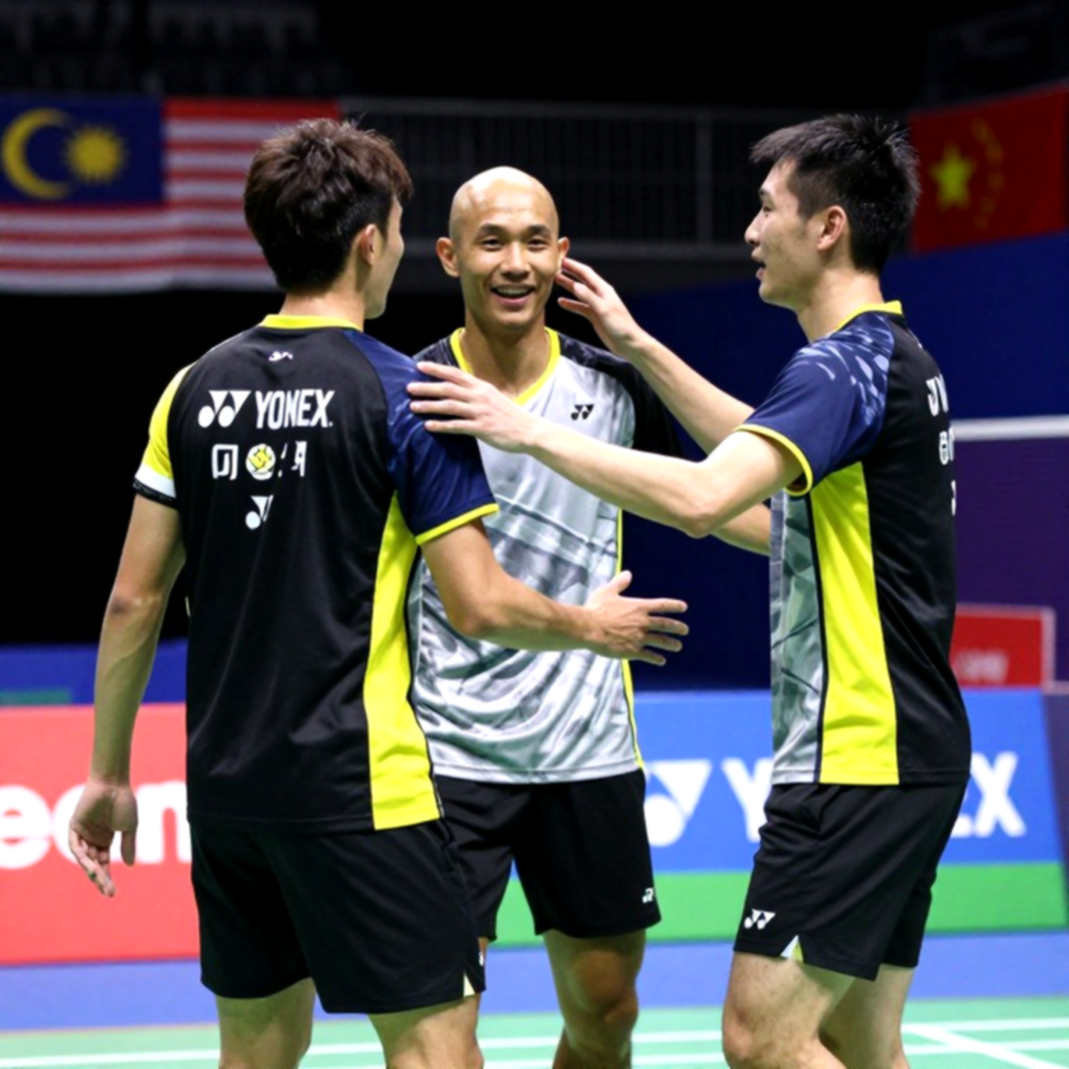
The ranking mechanism deserves a note, because it governs players like him. Badminton ranking points are counted from a player's best results over a rolling window, and old points expire. A player at this tier must keep reaching the later rounds at events suited to him just to hold position. Qualifying draws at Super 300 and Super 500 decide those places, and a Super 100 title is a ticket into them, no more and no less.
Behind the trophy sits an economic reality. USD 9,000 for a champion is typical of Super 100 and reflects the enormous prize-money gap between the bottom and the top of the tour. For an independent player without national-team funding, every extra round is income and every early exit is a loss. That explains why self-funded players cluster here: this is where they earn points and a living at the same time.
The real subject is not Aidil but the gap behind him
The obvious reading of this title is that a Malaysian player won an international event. That reading is correct and meaningless.
The more interesting number is two years and three months. Malaysia was long a men's singles power, with a line of players stretching across generations, from the Lee Chong Wei era onward. For more than two years, none of them reached a World Tour title. When a country with Asia's deepest badminton tradition goes silent for that long, the problem is structural, not personal.
The title that broke the drought came at Super 500: Australian Open 2026, Lee Zii Jia. The next one came at Super 100: Vietnam Open 2026, Aidil Sholeh. Malaysia's recent men's singles ceiling did not hold; it dropped a tier. That is the kind of data a results feed never displays, because both lines carry the word champion.
Alongside that sits the dependence problem. Lee Zii Jia has been Malaysia's only pillar for years, and in Ho Chi Minh City he exited in round two against an unseeded opponent. When the leader leaves early, almost nothing remains behind him. Aidil, an independent shuttler, was the one left carrying the back end of the draw. That structure, one star plus a silence, is a risk Malaysia has carried for years. A title in Ho Chi Minh City does not remove it; it exposes it more clearly.
The regional picture is no brighter. Thailand, Indonesia, Singapore, Malaysia and Vietnam all have men's singles players ranked broadly between No. 20 and No. 50, good enough to trouble each other and not good enough to break into the top group. The gap between Southeast Asia's second tier and the world's top ten is not narrowing; it is being papered over with Super 100 and Super 300 titles that generate too few ranking points to close it.
Then comes the most systemic detail: Aidil won as an independent player. He did not come through the association's centralised pathway. That raises the question of how a selection system favouring centrally trained squads will handle a champion standing outside it, in team events such as the Thomas Cup, in World Championship quotas, in funding and sponsorship allocation. Football and several other Asian sports have already faced this question, as athletes chose individual professionalisation over the state pipeline. Badminton is arriving at that fork, and Aidil is an arrow pointing the way.
His financial model is unclear. There is no information on whether he self-funds or has sponsors, who he trains with, or whether he has technical analysis support. Those gaps matter, because they determine whether this success can repeat. They also show something else: a trophy can be built on a far smaller support structure than people assume.
In media terms, the heat has stayed inside specialist channels, a congratulatory post, a few emojis, a few shares in the badminton community. There is no mass-media wave of the kind Olympic qualification produces. But the first time in two years and three months framing travels well, and in Malaysia it will be pushed further than the tier warrants. Expectation pressure follows, and it lands on a player with no evidence yet at the higher levels.
The contrarian angle: do not read a tournament label as a talent label
There are two wrong ways to discuss a Super 100 title.
The first is inflation. People read the words international champion and immediately file Aidil among the contenders. But a draw whose top seed is world No. 33 is a depleted draw, and winning it proves nothing at Super 500 or Super 750 level. Reading a tournament label as a talent label is the most common analytical error in professional sport, and it is always paid for with a cycle of disappointment.
The second is dismissal. The same people who inflated the result will, once disappointed, call it only a Super 100. But an independent player with no national-team support, three finals in two years, and a win over a higher-ranked opponent in the third, is doing exactly what a talent pathway is supposed to do. The fact that he did it outside the system does not make it smaller; it makes the question larger.
There is another blind spot, about the calendar. Titles are usually judged on the name of the event rather than on who actually showed up. A draw in the late-season window, after leading players withdraw or move to bigger tournaments, has far less competitive weight than its label suggests. Conversely, thin draws like this are where second-tier players learn how to win, a skill that cannot be trained in a practice hall and is only acquired by winning for real. Criticising a title for a weak draw is analytically fair; ignoring its learning value misses half the story.
I sat in the commentary booth at the Sudirman Cup 2026 and watched tournaments of that scale shape the careers of many young players. What I learned then still holds: a title at a low tier says nothing about the level of the player who won it, but it always says something about the system that produced him. The night I was taken off air in 2026 taught me this: right and wrong can wait, questions cannot. And the right question here is not whether Aidil Sholeh is Malaysia's next heir.
The right question is why a country with Malaysia's badminton depth needed an independent player to end a two-year-three-month run without a title.
Three signals worth tracking over the next twelve months
First, Aidil himself. If he reaches the quarter-finals or better at three of his next five Super 300 or Super 500 events, the Super 100 label removes itself. If he exits in the first or second round, the story will be rewritten in the other direction, faster than expected.
Second, Lee Zii Jia. His form determines how Malaysian men's singles is narrated for the next two years. A run of good results reduces Ho Chi Minh City to a footnote. Another run of early exits turns it into a symbol of a genuine crisis.
Third, selection policy. If an independent player is named to a Thomas Cup or major team-event squad, the system is opening. If not, this title will stay in a personal drawer.
Takeaway
People buy players with data, but they win titles with what data cannot reach. Aidil Sholeh reached that thing in Ho Chi Minh City in a week when the draw was missing its biggest names. He will meet stronger opponents, and those results will speak louder than any praise.
What remains to watch is whether Malaysian badminton reads the message this title sends: the country has not run out of talent, but the paths that produce it may be narrower than assumed. The stadium was not full, but the shuttle still told a story that speaks.